An Elixir for the Ages: 1963 Kutjevo Graševina from Croatia

Photos and text by Cliff Rames © 2013

(Note: In the summer of 2012 I was asked to contribute a piece for the next edition of the “Every Wine Tells a Story” book compiled annually by Tara O’Leary. Unfortunately, the book was never published, but here is what I wrote for it, now shared for you here. I hope you enjoy it. ~Cliff)

***

THEY SAY THAT LIFE is made up of moments. That at the end when we look back on our individual lives certain fragments of time will blink like stars in a dark sky. That along the timeline of our lives certain small personal interactions or experiences will be recalled with laser clarity: distinct milestones – either meaningful or nostalgic – that we may or may not have noticed at the instant of their occasion.

Every once in a while, a lucky wine lover will encounter a certain vino that changes the game, shifts the boundaries of perception, and leaves one stunned, mystified… Gaping like a beached fish, overwhelmed by the mysteries of the universe, by the inexplicable ways that wine evolves in the bottle. A wine that transcends this world and dispatches the drinker’s consciousness into a parallel dimension where muses enlighten, angels and deities celebrate, and the sands of time flow not to make us old but to revive us with revelations and new discoveries.  

In 2012, I had the honor of being visited by one such wine – a 1963 Graševina “Arhivsko vino” (archive wine) from the Kutjevo winery (a historic bastion of cellared treasures in the Slavonia region of Croatia) on two separate and equally memorable occasions: once at the winery, and subsequently at a vertical tasting workshop of aged graševina wines called “Wine of Grace” at the Zagreb Wine Gourmet Weekend in Croatia.

DSC_0278

Tasting the same wine on two separate occasions did not diminish the profundity of my experience but reaffirmed it. Indeed both encounters left me paralyzed in awe, helpless to summon my professional sommelier training to conduct a point-by-point assessment and expound pretentiously upon the wine’s merits and misdemeanors.

DSC_0300

Instead I sat there dreamy-eyed, slack-jawed and loose-limbed, struggling to suppress the urge to whimper and weep like a baby. Lost in this dumbfounded comprehension of the implications associated with being touched by such a wonder of creation, I yielded to its mysteries and allowed myself to be absorbed.

Forty-nine years of dormancy and leisure in a mold-crusted cellar deposited a patina of fossilized dust and organic matter on the bottle, cloaking it in ash-colored velvet. I watched with mixed emotions (excitement, sorrow, anticipation, unworthiness) as the bottle was opened, revealing a cork that was amber and black with age, ripe and moist.

DSC_0282 (2)

What emerged from within was a beautiful liquid genie: older and wiser, perhaps, but no less enchanting with sultry hues of gold, a brilliant clarity and regal structure. Now exhumed from her confines, this “wine of grace” released – or rather, bestowed upon us like a cherished, granted wish – an alluring, continuously unfolding tapestry of rich aromas: honey, roasted nuts, candied citrus peels, autumn bouquet, buttered forest mushrooms, something akin to apricot cobbler….

DSC_0305

Ensconced as I was in such a blissful stupor – sniffing, swirling, marveling – I quietly flipped back pages of history. Over the decades in which the 1963 Graševina laid still in the damp darkness of its lonely old cellar in Kutjevo,  the world outside the cold stone walls was bustling, with many things coming to pass: my parents’ marriage; my birth; Beatle Mania; the deaths of Elvis and John Lennon; the Vietnam war; Jimi Hendrix’s ascent to guitar god; Watergate; Apollo 11 and Neil Armstrong; the heady days of Led Zeppelin; the ’69 Mets; the first Apple computer; Disco; mullet haircuts; Jaws; the Space Shuttle; Michael Jackson’s lifetime; the fall of the Berlin Wall; the break-up of Yugoslavia and the war in Croatia; Seinfeld; cell phones and smart tablets; the Millennium; September 11th; endless wars in the Middle East; Facebook and memes; the unrealized Mayan prophesies; the first African-American U.S. president…..

DSC_0279

Like wrinkles and wisdom, history was now woven into the wine’s fabric. While graševina is not a wine noted for its noble pedigree or ability for long-term aging, the 1963 from Kutjevo winery decisively dispelled any generalized notion about the inability of certain white wines to age. Barely frayed or faded, it was clearly still a living thing, delivering layer upon layer of rich texture, exotic nuance, and vibrant character.

I was not the only one to notice. Judging by the reflective silence and mesmerized faces of those with me, the moment in time we collectively shared while in the throes of vinous enlightenment was truly an enchanting and unforgettable experience.

Judith Burns of Pacta Connect ponders the 1963.

Judith Burns of Pacta Connect ponders the 1963.

A wine of such grace and rarity may not come our way everyday. But if you ever have the opportunity to discover an older vintage or indulge in a unique bottle of some strange varietal wine from a far-off land, please don’t miss it. The experience may turn out to be one of those moments in life that you will treasure forever.

 ***

IF THIS WINE were a celebrity it would be Meryl Streep: an actress of such grace and charm who grows more lovely, sophisticated and relevant with age. Like Mona Lisa on canvass, on screen Meryl shines with just the right balance of profundity, grace and sass, coddling the soul, providing comfort to the heart, and stoking the fires of imagination – all this while defying the ravages of time with her elegant poise, child-like charms and timeless beauty. (Note to Meryl: I still have one more bottle of the 1963 Kutjevo Graševina in my cellar. Stop by anytime. I’d be happy to open it for you.  :-) )

winesofcroatia_banner

Slopes Fit for a Queen: Zdjelarević Hotel & Winery – in Pictures


(All photos ©2012 Cliff Rames)

Last month, two editors from Wine Enthusiast magazine, Mike DeSimone and Jeff Jenssen (aka the World Wine Guys), visited Croatia to receive the Golden Pen Award from the Croatian National Tourism Board for their article called “Croatia – In Living Color”, which was published in the September 2011 issue of Wine Enthusiast.

After receiving the Golden Pen Award (“Zlatna Penkala”), the Wine Guys toured a selection of wineries, vineyards, hotels, restaurants and other sites in the continental region of Croatia.

The Wine Guys were escorted by Cliff Rames, sommelier and founder of Wines of Croatia, who along the way captured a few snapshots of their journey. We will be sharing an assortment of Cliff’s photos with you over the next few weeks, including this collection of shots from Zdjelarević winery in the Slavonski Brod wine-growing hills of the Slavonia region of northeastern Croatia.

Zdjelarević Hotel & Winery – directed by winemaker Davor Zdjelarević – cultivates 10 hectares of its own vines as well as another 20 hectares of vines under lease, which allows the winery to produce up to 150,000 bottles of wine per year. Among its best loved wines are the Nagual Grand Cuve Cabernet Sauvignon/Merlot and Nagual Grand Cuve Chardonnay/Sauvignon labels, as well as the Klink@ line of early drinking wines designed to appeal to Generation X consumers.

(Photo courtesy of Zdjelarevic winery)

According to the winery, Queen Elizabeth II is said to have enjoyed Zdjelarević’s 2009 Chardonnay – a wine produced from vines that overlook the long sloping hills that meander southeastward toward the town of Slavonski Brod and the Sava river – an area not generally recognized for its world class wines. It looks like Davor Zdjelarević is trying to change that.

The property also includes a hotel with 12 rooms and three apartments and a gourmet restaurant where guests can dine like a king – and drink like a queen! :-)

Room with a view!

Davor Zdjelarevic (left); Cliff Rames

Lunch at Korak Winery in the Rolling Hills of Plešivica – in Pictures

Korak vineyards, Plešivica

(All photos ©2012 Cliff Rames)

Last month, two editors from Wine Enthusiast magazine, Mike DeSimone and Jeff Jenssen (aka the World Wine Guys), visited Croatia to receive the Golden Pen Award from the Croatian National Tourism Board for their article called “Croatia – In Living Color”, which was published in the September 2011 issue of Wine Enthusiast.

After receiving the Golden Pen Award (“Zlatna Penkala”), the Wine Guys toured a selection of wineries, vineyards, hotels, restaurants and other sites in the continental region of Croatia.

The Wine Guys were escorted by Cliff Rames, sommelier and founder of Wines of Croatia, who along the way captured a few snapshots of their journey. We will be sharing an assortment of Cliff’s photos with you over the next few weeks, starting with this collection of shots from Korak winery in the Plešivica wine-growing hills – a cool, hilly region about 30 minutes west of Croatia’s capital city, Zagreb.

Korak is best known for his chardonnay and pinot noir wines – considered some of the best in Croatia. You can read more about Korak HERE and HERE.  Over lunch we also sampled the wines of Drago Režek, who fashions lovely Rizvanac (müller-thurgau) and Zeleni Silvanac (sylvaner) from grapes grown in his Plešivica vineyards.

A huge thank you to Velimir Korak, his wife, and son, Josip, and visiting winemaker, Damir Režek, for an amazing day and their wonderful hospitality!!

Korak winery, Plešivica

Lunch among the vines, Plešivica

Korak vineyards, Plešivica

Flowering chardonnay, Plešivica

rose sentinels

Režek Rizvanac

Host winemakers, Velimir Korak (standing); Damir Režek (sitting)

Režek Zeleni Silvanac

Jeff Jenssen (l); Damir Režek; Velimir Korak

Korak 2009 Rizling (riesling)

Lunch is served!

Damir Režek and his lovely Chardonnay sur lie.

One of the best Croatian chardonnays: Korak sur lie.

Dessert! Apple strudel with Korak 2007 Rizling Izborna Berba (Riesling T.A.)

a last view before a nap, Plešivica

Cliff Rames; Mike DeSimone; Velimir Korak; Jeff Jenssen

Tomac Winery, Anfora, and the Wine Guys – in Pictures

Last week, two editors from Wine Enthusiast magazine, Mike DeSimone and Jeff Jenssen (aka the World Wine Guys), visited Croatia to receive the Golden Pen Award from the Croatian National Tourism Board for their article called “Croatia – In Living Color”, which was published in the September 2011 issue of Wine Enthusiast.

After receiving the Golden Pen Award (“Zlatna Penkala”), the Wine Guys toured a selection of wineries, vineyards, hotels, and restaurants in the continental region of Croatia.

The Wine Guys were escorted by Cliff Rames, sommelier and founder of Wines of Croatia, who along the way captured a few snapshots of their journey. We will be sharing an assortment of Cliff’s photos with you over the next few weeks, starting with this collection of shots from Tomac winery in the Plešivica wine-growing hills – a cool, hilly region about 30 minutes west of Croatia’s capital city, Zagreb.

Tomac is best known for his sparkling wines and iconic Anfora wines. You can read more about Tomac HERE.

(All photos ©2012 Cliff Rames)

Welcomed to Tomac winery by the roses.

Tomislav Tomac

The House of Anfora

Buried anfora

Sparkling rose on a spring day – perfect!

Fine “perlage”

A riesling of great potential.

Tomac “Classic” 2006 sparkling (70% Chardonnay; 30% field blend)

Anfora 2009 Riesling

Wine Guys with Zvonimir and Tomislav Tomac

Nothing like good wine talk & debates!

The Gang: Cliff Rames; Jeff Jenssen; Tomislav Tomac; Mike DeSimone; Zvonimir Tomac

Plešivice vineyards

Croatian Wines Featured in New Fire Island Cookbook

By Cliff Rames © 2012

In recent years you could say that a cookbook renaissance has taken place. While catch-all cookbooks are still popular, such as the iconic Essential New York Times Cookbook, the heirloom Betty Crocker Cookbook, and the mandatory Cook Illustrated Cookbook, regional and single-subject cookbooks have become all the rage.

I guess it may have started with Julia Child’s opus called Mastering the Art of French Cooking, which made the mysteries of snobby French cuisine accessible to housewives and aspiring chefs casting about in kitchens across America and elsewhere.

Today other testaments to regional cooking abound on the shelves of bookshops and – I suppose – digital libraries. The Silver Spoon comes immediately to mind, the heavyweight tome to Italian cuisine.

But regional explorations have progressively drilled down from the macro to the micro level, as interest in cooking has mushroomed and serious-minded cooks seek out authenticity, uniqueness and novelty to set their recipes and menus apart from the common or mundane. Call it the need for terroir in pot and on plate.

Whatever you call it, at the core this trend is surely based in primal human desires for discovery, for reward, for excitement, for something safe and satisfying to eat. But it also registers at a more intellectual level and raises the banner of a movement that seems to be well underway – not just in the culinary experience but also in wine: the urge to experience a sense of place in what we consume; and a rejection of generic, industrial and chemically-farmed products that so litter supermarkets and many mainstream restaurants.

“Eat Local” is the mantra of this movement. “Sustainability”, “organic”, “artisanal”, “small batch”, “handmade” are some of the buzz words that drive the message home. The point is, to increasing numbers of people, cooking is no longer just a function that precedes eating. It is passion; it has meaning; it should be creative yet wholesome; it needs to provide enjoyment, fulfillment, and healthy nourishment; it should be respectful of tradition yet never be dull or generic; and it should showcase and celebrate seasonal ingredients and – when possible – locally-grown products.

Jeff Jenssen & Mike DeSimone – The Wine Guys (photo by Cliff Rames)

And thus we arrive at Fire Island, where authors Mike DeSimone and Jeff Jenssen (aka, the World Wine Guys), in The Fire Island Cookbook (Atria Books), present us with 14 different menus born out of recipes acquired on their worldly journeys as food and wine writers. Each recipe strives to incorporate fresh ingredients that visitors to the Long Island, NY summer seaside hideaway would find at the local groceries, butcher shops, and fish and vegetable markets during the summer season. And each recipe comes with a sachet of secret spices: Mike and Jeff’s exceptional presentation, inspired sense of hospitality, and delightful food and wine pairing talents.

Within its colorful and appealing pages The Fire Island Cookbook offers a smorgasbord of breezy menu suggestions for an array of tastes and a variety of occasions, such as a “Noche Caliente Spanish Dinner”; “Rainy Day French Menu”; Fourth of July Pool Party”; “Mediterranean Odyssey”; “Villa in Tuscany”, to name just a few.

However, the menu that caught my attention was (of course) “Height of the Empire”, a collection of hearty recipes that hail back to the Austro-Hungarian Empire. The flavors here are rich yet simple, piquant and savory, rustic yet comforting. Most interestingly, while these recipes reflect the traditional cuisine of the continental, southeast Europe, the wines that Mike and Jeff pair with them are coastal, specifically from the Istria and Dalmatia regions of Croatia.

Kicking off the menu is a recipe for Panfried Quail with Kielbasa-Studded Orzo, paired with Saints Hills Nevina, a blend of malvasia istriana and chardonnay from the Istria region of northern coastal Croatia.

Saints Hills Nevina (photo by Cliff Rames)

Next is Viennese Stuffed Peppers, paired with Matošević Grimalda red, another Istrian wine that is a blend of merlot and teran.

Matošević Grimalda (photo by Cliff Rames)

Crowning the feast of the Empire is Chicken Paprikash with Homemade Butter Dumplings, paired with an equally noble wine, Saints Hills Dingač, made from plavac mali grapes grown at one of Croatia’s most prestigious vineyards on the Pelješac peninsula along Croatia’s Dalmatian coastline.

Saints Hills Dingač (photo by Cliff Rames)

Whether or not you visit one of the 1,100+ islands in Croatia or Fire Island, NY this summer, it doesn’t matter. All you need to do is open The Fire Island Cookbook and you will be transported to a breezy seaside resort where everything tastes good and it doesn’t matter if it is sunny or rainy.

And even if you are a novice cook or making the best of it in a cottage kitchen, have no worries: the book is written in such a way that you feel as though Mike and Jeff are there with you, guiding you through each step while telling stories of their travels and pouring you another glass of that delicious Croatian wine they discovered on their last trip.

Throughout its pages The Fire Island Cookbook projects practical know-how kitchen-tested experience, all peppered with a touch of romance and giddiness that only summer by the sea can inspire, and exudes the warm hospitality for which Mike and Jeff are so known and loved.

Giving it additional gravitas in a world rife with cookbooks of every ilk, The Fire Island Cookbook successfully embraces locavore philosophy while weaving in an appreciation for exotic and exquisite treats from foreign lands. And that, my friends, is a recipe for summer patio yumminess.

As they say in Croatia, “Dobar tek i zivjeli” (Good appetite and cheers!)

Mike & Jeff at a Barnes & Noble book signing, Freehold, NJ, April 2012 (photo by Cliff Rames)

Jeff Jenssen (photo by Cliff Rames)

Photo Essay: A Walk Among the Vines with Vlado Krauthaker, Kutjevo, Croatia

Vinarija Krauthaker vineyards, Kutjevo, Slavonia, Croatia – April 2012

(Photos © 2012 Cliff Rames)

Reflections on the 2012 Zagreb Wine Gourmet Weekend – Part II

(Text and photos Cliff Rames © 2012)

This is Part II of our two-part report. For Part I, please click here.

The VIP Guests

Each year the organizers of the Zagreb Wine Gourmet Weekend (ZWGW) make an ambitious attempt to draw international visitors and VIP guests to the festival. Without doubt this is a wise and positive thing for which to aim. Croatia is an exciting emerging winemaking country and it should be blowing its trumpets and utilizing all its tools and resources to draw attention to its fabulous winemaking history and culture.

This year’s lineup was especially exciting, as the guest list included many interesting and important VIPs from the international wine trade and media. Among them, George Taber, author of several wine books, including “Judgment of Paris”; Bernard de Laage de Meux, Commercial Director of Chateau Palmer; Ivo Jeramaz, Vice President of Vineyards & Production in Grgich Hills Winery; Sarah Kemp, Editor of Decanter magazine; Lynn Sherriff, President of the Institute of Masters of Wine; David Gates, Vice President of Ridge Vineyard in Sonoma, CA; as well as the entertaining Flying Culinary Circus, four Norwegian chefs who take catered food service to new heights with fun and innovative performances.

Ivo Jeramaz of Grgich Hills conducting a tasting seminar.

Check out this video from the festival, in which David Gates speaks about his impressions of Croatian wines:


Highlights

To choose just a few highlights from ZWGW is nearly impossible. I enjoyed every minute of the festival. Such was the abundance of activities and rich schedule of events that I often found myself torn over which ones to attend. My entire 3-day stay at ZWGW was a whirlwind of dashing from seminars to workshops to tasting tables and then off to panel discusses and back to the tasting room for more swirling and sipping….It’s all a blur now. But a few things do happily stand out in my memory.

The Wines

Rather than point out individual wines that really sang to me (some of these may be revealed in later posts), I think it’s important to note that there were very few bad wines. Technical quality is certainly getting better and better each year. But technically correct wine doesn’t always mean interesting or compelling wine. Oak has been a pervasive and often invasive, overdone fad in Croatia in recent years, especially with certain plavac mali and malvasia istriana wines. I was happy to see some of the slathered wood tamed and/ or eliminated in some of the wines this time around (although there are still some wines that I think could benefit from less or no wood, or at least being held in cellar longer before release to allow the oak to better integrate; and a small few could benefit from more oak treatment).

Teran, a red grape variety from the Istria region, continues to demonstrate great potential as an affordable, food-friendly, and terroir-expressive wine that does not need oak to achieve an earthy, animal complexity.

While I spent a little time revisiting some old favorite producers (sadly, there were some I missed and regret not seeing), my focus was on wines that I never before tasted, especially those made from native grapes from lesser-known producers. And of course I am always on the look-out for the Holy Grail: those serendipitous wines that reveal true soul, tell a story, and sing a song!

On that note, I have to admit that I was disappointed to find no grk or škrlet producers represented, as well as a few key winemakers absent from the fair (e.g., Clai, Matošević, and Roxanich). But overall there was a satiating amount of wine to taste, and it was loads of fun comparing the various different styles of graševina (young & fresh; oaked and cellar aged), malvasia istriana (young & fresh; macerated & developed), and plavac mali (unoaked; field grown grapes; oak aged; single appellation and single vineyard), as well as babić, crljenak kaštelanski, debit, maraština and pošip.

I even discovered a new grape variety: ulovina! Ulovina is an ancient white variety indigenous to Istria and used as a blending component (along with malvasia istriana and muškat momjanski) in Benvenuti’s sublime “Corona Grande” sweet dessert wine.

Workshop: Zinfandel. Primitivo, Crljenak Kaštelanski: Ten Years After

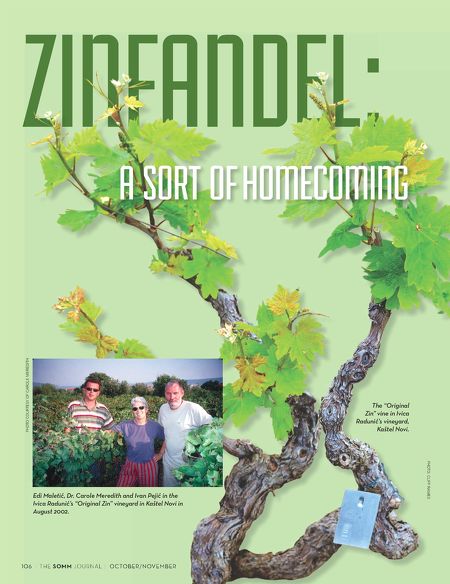
By now many of us are well aware that the origins of zinfandel trace back to Croatia, and that California zinfandel, Italian primitivo, and Croatian crljenak kaštelanski are all the same grape. However, the opportunity to taste all three of these distinct vins de terroir side by side at one sitting would be a rare and fascinating occasion. Thanks to the ZWGW, the opportunity presented itself at this workshop, one of the truly “do not miss” events in the program.

Guiding us through the comparative tasting was a number of key individuals from the world of “ZPC” (zinfandel, primitivo, crljenak): George Taber, author of Judgment of Paris, the now famous account of the 1976 Paris tasting organized by Steven Spurrier that rocked the wine world and put Napa Valley on the map; Ivo Jeramaz, Vice President of Vineyards and Winemaking for Grgich Hills winery in Rutherford, CA (Mike Grgich was the person who first suggested that California zinfandel and the red wines that his father used to make in Croatia were very similar in character, and he was an early supporter of the research that lead to the ZPC discovery); Professor Edi Maletić and Professor Ivan Pejić from the University of Agriculture in Zagreb, two of the leading researchers behind the ZPC discovery; David Gates of Ridge Vineyards, an iconic California producer of single-vineyard zinfandel wines; Gregory Perrucci, an Italian producer of Giravolta Primitivo; and Croatian crljenak producers Zlatan Plenković (Zlatan Otok); Nevin Vuina (Vuina  Štafileo); and Nikola Nikša (Mimica) from Kuća sretnog čovjeka

My quick impressions of these expressions of the same grape from three different countries?

The Ridge 2008 Geyserville zinfandel was a huge wine, round and richly layered and extracted, viscous and full of black raspberry, plum, licorice and chocolate – a style that is much revered among disciples of zinfandel. The Grgich 2008 was a bit more refined with lighter red fruit and floral notes. The Giravolta 2010 Primitivo was soft and fruity with velvety cherry and raspberry character; a nice wine but quickly forgotten once the crljenaks arrived.

Okay, I know I am a little biased. But the three Croatian crljenak wines really struck my chords and made music with those old familiar notes of dried fig, Adriatic sea salt and roasted herbs, black plum and cherry, accompanied by a little Dalmatian funk.

With crljenak in glass, suddenly I did not miss the rich extracts of California zin.

The 2008 Zlatan Crljenak was the most extracted and a little too tannic yet still fresh; “rough and rustic” I wrote in my notes. The 2010 Vuina Štafileo Crljenak was too young and closed up but showed refreshing acid and good tannic structure; slightly alcoholic on the nose, it would benefit from some more time in neutral wood. The third wine was my favorite, the Mimica 2008 Pribidrag (aka crljenak) from Kuća sretnog čovjeka – or, in translation, the “House of the Happy Man”. What a great name for a balanced, delicious wine with ripe Dalmatian fruit character and enduring freshness! Indeed I left this tasting a happy man.

“Happy Man” wine!

Workshop: Wine of Grace – Graševina

Making me even happier was seeing this event on the schedule: a vertical tasting of graševina wines – vintages 2011, 2010, 1994, 1985, 1970, 1963, 1960 – from Kutjevo winery. To say that this was a rare opportunity to examine the five decade progression of a white wine from Croatia would be imprecise: this was an extraordinary experience during which those of us lucky enough to be there got to taste fifty two years of history in a one hour seating.

Even more astounding, graševina is not a variety that is noted for having a noble pedigree or ability for long-term aging. In Croatia and in many other regions along the Danube River basin, graševina (aka welschriesling) is a simple table wine meant for everyday quaffing and even mixing with mineral water to create a summer sipper called “gemišt”. Often a maligned workhorse grape, when not properly managed in the vineyard it can wildly overcrop and produce thin, acidic wines that are sold on tap, in one liter bottles with metal crown caps, or as boxed wine. In better examples, it is normally a 2-3 year wine that expresses apple and tree fruit character, a piquant finish, and refreshing acidity.

But here it was, dating all the way back to 1960, getting deeper gold in color as the years retreated beyond my date of birth, evolving along the way into richer, nuttier, honey and candied fruit aromas. The 2011 from Kutjevo was fresh, lively, and savory with a delicate apple blossom note. At the other end of the spectrum, the 1960 was starting to show signs of being tired and past its glory. But in ensuing years between, magic was brewing.

My favorite by far was the 1963. I first tried this “Archive Wine” last year at the winery and was blown away. I cried. Cried from happiness. Overwhelmed by the mysteries of the universe; by the inexplicable ways that wine evolves in bottle; by the time that has passed, leaving its marks on my face and in this beautiful wine.

While that graševina laid quiet in that old cellar in Kutjevo, many things outside happened: the Beatles conquered America and the planet; I was born; the Vietnam war; Korea; Jimi Hendrix; Led Zeppelin; Watergate; Space Shuttle missions to space; the first Apple computer; mullet haircuts; Michael Jackson’s lifetime; the fall of the Berlin Wall; the break-up of Yugoslavia and the war in Croatia; cell phones; 9/11; endless wars in the Middle East; Facebook; the first African-American U.S. president…to name a few.

The point is, all of that history – like wrinkles and wisdom – was somehow sewn into the wine’s fabric, with almost no fraying or fading. Judging from the mesmerized faces and stunned reactions of others at the tasting, drinking this treasured wine was truly an enchanting and righteous experience. Thank you Kutjevo winery for sharing!

Judith ponders the 1963.

Darko too!

I will try to write more about this tasting in a future post in order to do each wine justice. For now, suffice it to say that events like this one are an effective selling point for ZWGW and will certainly entice me – and hopefully more international visitors – to keep coming back.

Film Screenings

Okay, despite my strong desire and best efforts, I was unable to attend any of the film screenings that were part of the weekend’s schedule of events. A pity! But I was told by people who attended that it was a nice respite from the surge outside and the films were well done. I like the dynamic that this dimension added to the program, and hope that the organizers keep it next year. For a full list of all the films shown at the festival, please consult the ZWGW website.

Meeting Trevor Long and Judith Burns

I have to admit, prior to arriving at ZWGW, I heard about and frequently came across on social media the husband and wife team who operate Pacta Connect  and import Croatian wines into the U.K. and Ireland, Trevor Long and Judith Burns. However, I had never met them personally or knew them well enough to understand their motives and mission. Frankly over the years I have grown weary and disheartened by random so-called “experts” who present themselves as authorities on Croatian wine after just one or two trips to Croatia. Some of these folks do more harm than good to the Wines of Croatia brand through misinformation, less-than-transparent agendas, and shoddy business practices.

To be clear: Trevor, Judith and Pacta Connect do NOT fall into this category. Trevor and Judith are two very passionate and professionally-minded people who take the business of importing and promoting Croatian wines very seriously. Not only do they take great pleasure and care to represent the wineries in their portfolio with enthusiasm and coherence, they have also invested years of time and resources in the pursuit of learning more about each one by visiting the vines and spending days and weeks at a time with the winemakers. They hand select each wine for their portfolio based upon a criteria of artisanship, sustainability and authenticity. They also possess a keen understanding of their market and sharp sense for marketing and connecting with potential customers.

At the moment Pacta Connect is perhaps the most important and trending importer of Croatian wines in the U.K., and Trevor and Judith are certainly leading pioneers and worthy colleagues in our joint mission to tell the story and share the love for the wines of Croatia. It was a true pleasure to meet them at ZWGW and to hear their stories (Trevor used to manage rock bands!), their vision, and their love and respect for the wineries they represent.

Pacta Connect’s Twitter page (@pc_wines) says it best: “Living & breathing & loving good wine! Importers of great Croatian artisan wines, grappas & oils to the UK & Ireland. Social media fans.”  

If you haven’t yet had the chance to follow Trevor and Judith’s endeavors, please do say hello. They are working hard to make a difference, and I for one am amazed by and grateful for all they have done.

Twitter Tasting

When asked by the organizers of ZWGW to moderate a two hour session devoted to Twitter, I have to admit that my blood went cold. As much as I enjoy Twitter and understand its mechanisms and benefits, two hours is an awfully long time to talk about it, even if we would be adding a live blogger tasting of three wines to demonstrate one of Twitter’s many and livelier functions: the Tweet-up. A Tweet-up is a gathering (usually at different remote locations) of Twitter users, all tweeting about a common subject (in this case wines that they were tasting).

Our ZWGW guest panel of “twixperts” (Twitter experts) and winos included Lada Radin and Nenad Trifunović of Taste of Croatia. Our guest star was to be Marcy Gordon, an experienced travel and wine writer from California who operates the excellent Come for the Wine blog. Sadly, Marcy ran into a series of unexpected and unfortunate travel glitches that resulted in her having to cancel her trip after spending nearly 12 hours in the airport. We certainly missed her and hope she can make it toCroatia again soon!

At ZWGW Marcy planned to share her story of how she discovered Wines of Croatia through Twitter, which led her to Frank Dietrich at Blue Danube Wine Company in San Francisco, which inspired a successful blogger tasting of Blue Danube’s portfolio of Croatian wines, which resulted in Marcy being invited on a press trip to Croatia last year, and served as the basis for which she was invited as a VIP guest to ZWGW this year.

Marcy’s “twittertrail” experience – following the threads and connections of contacts on the social network – was the perfect example of the magic and power of Twitter. With over 175 million users, Twitter offers businesses, wineries, importers, wine writers, wine sellers, and PR and marketing agents a huge opportunity to reach large numbers of potential customers. To reveal and explain that benefit was the message and purpose of the Twitter tasting at ZWGW.

(Photo by Igor Nobilo)

To show Twitter in action, we asked several U.S.-based wine bloggers to taste along with us the same three wines we tasted at the session inZagreb: Krajančić 2009 Pošip, Terzolo 2009 Teran, and Miloš 2008 Plavac. As they tasted, the bloggers tweeted their impressions and comments; their tweets were projected onto a big screen in the auditorium in Zagreb for ZWGW participants to see and read. To track the action, we employed a hashtag (a # symbol) before the key word that flags the term and makes it easier to search and track. The hashtag was #WoCroatia (for Wines of Croatia).

Other hashtags that we threw in for good measure were #winelovers and #zwgw. And in the heat of the action, a new hashtag (thanks to Nenad Trifunović) was born: #teranslut.

The session was fun and hopefully useful to the attendees. I was disappointed that more winery personnel did not attend. Many Croatian wineries do not use Twitter, and this session was mainly designed to encourage them to discover Twitter and start using it to market their wines.

For any Twitter users out there, here are the user names for the panel and blogger participants at the session. Please follow us!

Wines of Croatia: @WinesofCroatia

Blue Danube Wine Company: @BlueDanubeWine

Marcy Gordon: @marcygordon

Richard Jennings: @RJonWine

James Melendez: ‏@JamesTheWineGuy

Taste of Croatia: @TasteofCroatia

Mattie John Bamman: @ravenoustravelr

KimberleyLovato: @kimberleylovato

ZagrebWine Gourmet Weekend: @ZWGW

Goran Zgrablić: @manjada

Conclusion

Despite a few glitches and the acclimation period required before you can successfully navigate your way to the many hidden tasting rooms and off-site seminar locations, ZWGW was an educational, interesting and exciting wine event – one not to be missed if you are serious about discovering what Croatia has to offer.

Each year ZWGW gets better and better, and I applaud the organizers for listening to feedback and attempting to address the issues and adjust the plans for the next year’s fair. This willingness to avoid a “cut and paste” process and repeat the same show over and over again is encouraging, keeping things fresh and pushing the boundaries further outward towards discovery – and hopefully less hungry bellies!

The focus on drawing an international audience is essential, especially in light of the need to brand Croatia and a complete tourist destination, not just a wine destination. Perhaps an idea for the future would be to invite representatives from tourist agencies that operate in the corresponding wine regions to present the other features and offerings of those regions – the hotels, the restaurants, the tourist sites – to create a full immersion impression of the area?

Overall, the 2012 Zagreb Wine Gourmet Weekend was an excellent and enjoyable event. If this is the blueprint going forward, then the ZWGW will surely continue to rank as one of the most important annual wine events in Croatia. At least until the next Big Bang. ;-)

For more photos from ZWGW, please check our Facebook page HERE.

We leave you now with the official video produced by ZWGW showing some of the action. Enjoy!


Follow

Get every new post delivered to your Inbox.

Join 5,498 other followers